
Executive Summary & Key Takeaways
When SanDisk casually announced a 10% price hike in 2025 like they were updating their lunch menu, the tech world collectively did a double-take. But here’s the thing – this wasn’t just another corporate money grab. This move signals something much bigger: the memory market is finally crawling out of its oversupply hangover and into what looks like a very profitable recovery party.
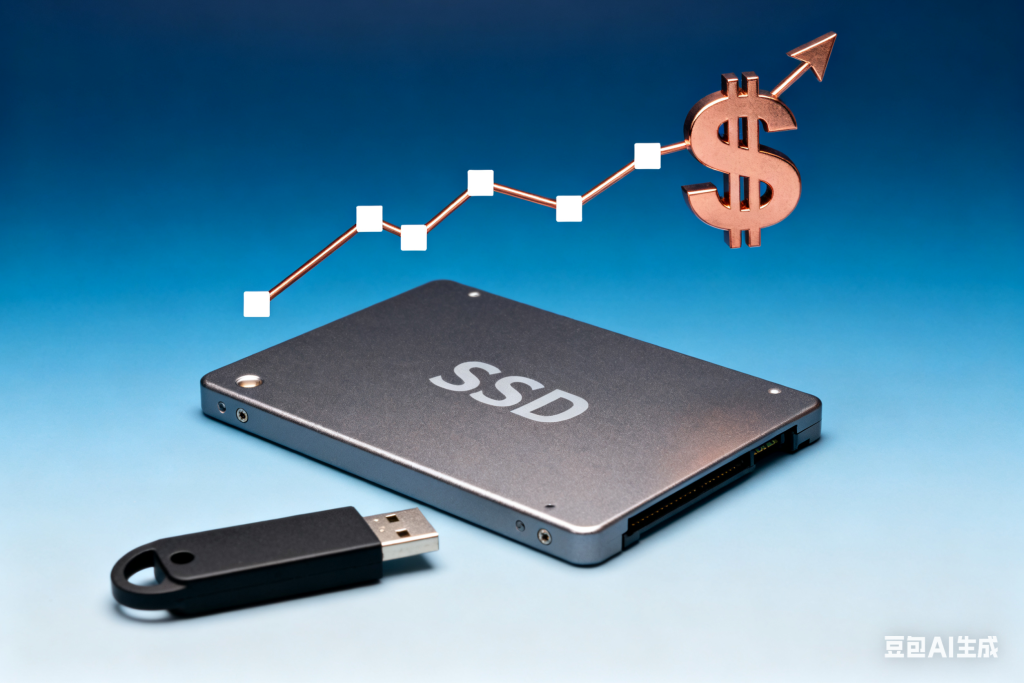
The main signals? We’re witnessing a market transition from “help, we have too much storage!” to “actually, we could use some more of that AI-powered goodness.” The primary drivers include an AI boom that’s hungrier for storage than a teenager’s Netflix account, plus some very strategic production cuts that would make OPEC proud. For investors, this is looking like the beginning of a pricing power recovery phase – and Wall Street is already throwing confetti with SanDisk’s stock jumping 14%.
The Price Increase Facts: What Actually Happened
Let’s get the facts straight before we dive into the juicy analysis. SanDisk didn’t just wake up one morning and decide to test customer loyalty. They’ve actually pulled the pricing trigger twice in 2025 – first on April 1st (and no, it wasn’t an April Fool’s joke, though some customers probably wished it was), and again on September 4-5.
We’re talking about over 10% increases across their entire product buffet: consumer SSDs, enterprise storage, USB drives, and memory cards. Nobody was spared. It’s like they decided to raise prices on everything from the fancy steakhouse offerings to the gas station snacks.
The market’s reaction? Well, SanDisk’s stock shot up 14% faster than a rocket-powered shopping cart. Analysts at Benchmark got so excited they bumped their price target from $70 to $85, probably while doing a little happy dance in their offices. When Wall Street gets this enthusiastic about price increases, you know something interesting is brewing.
Market Signal #1: Supply Tightening After Oversupply Era
Remember 2023-2024? That was when the memory market had what economists politely call “oversupply conditions” and what everyone else called “a complete disaster.” Manufacturers were practically giving away storage like promotional keychains at a trade show.
But here’s where it gets strategic. The industry collectively decided to play a game of “let’s cut production and see what happens.” We’re talking 15%-25% production cuts across the board – the kind of coordinated effort that would make cartels jealous (but totally legal, of course).
Think of it like this: imagine if every pizza place in town was making way too many pizzas, selling them for barely enough to cover ingredients, and slowly going broke. Then they all simultaneously decided tomake fewer pizzas. Suddenly, pizza becomes scarce, prices go up, and everyone starts making money again. That’s essentially what happened in the memory market, except with significantly more semiconductors and fewer pepperonis.
Add in rising operational costs, tariff impacts that nobody asked for, and raw material prices that seem to have their own inflation party, and you’ve got a perfect storm for supply tightening.
Market Signal #2: AI-Driven Demand Surge
Now here’s where things get really interesting. While suppliers were playing hard-to-get with production, demand decided to crash the party like an uninvited college roommate. And the biggest party crasher?
Artificial Intelligence.
Data centers are expanding faster than suburban strip malls in the 2000s. Hyperscale facilities are popping up everywhere, and they all need high-performance storage that can handle the digital equivalent of drinking from a fire hose.

AI infrastructure is basically a storage black hole. These AI servers are hungrier for data storage than a social media influencer is for validation. Every ChatGPT conversation, every AI-generated image, every machine learning model – they all need somewhere to live, and that somewhere is enterprise-grade storage.
But it’s not just the enterprise world going crazy. The consumer market is finally waking up from its post- COVID slumber. Smartphones are demanding more storage (because apparently 128GB isn’t enough for 47,000 photos of your lunch), the PC market is stabilizing, and gamers are downloading files larger than small countries’ GDP.
It’s like the perfect storm of demand – if perfect storms were actually good things that made investors happy instead of requiring emergency shelters.
Market Signal #3: Industry Pricing Power Recovery
This is where things get really spicy. For the longest time, memory manufacturers were stuck in what business schools call “destructive competition” and what normal people call “a race to see who can lose money fastest.”
The industry was trapped in a pricing death spiral where everyone kept cutting prices to win market share, except nobody was actually winning because everyone was losing money. It was like a game of limbo where the bar kept getting lower until everyone was basically crawling on the ground.
But SanDisk’s price increase signals something beautiful: the return of pricing power. Instead of competing on who can offer the cheapest storage, companies are finally competing on who can offer the best value while actually making a profit. Revolutionary concept, right?
The ripple effect is already starting. When the market leader raises prices and their stock goes up instead of down, that’s a pretty clear signal to competitors. Samsung and SK Hynix are probably dusting off their own price increase playbooks as we speak.
What This Means for Different Stakeholders
For Consumers
Let’s be honest – this isn’t great news if you’re planning to upgrade your gaming rig or finally buy that 4TB SSD you’ve been eyeing. Storage devices are going to cost more, which means your wallet is going to feel lighter.
Some consumers are already showing classic economic behavior: hoarding. People are buying storage devices in bulk like they’re preparing for a digital apocalypse. Others are delaying upgrades, which creates its own interesting market dynamics.
Budget-conscious buyers are getting hit the hardest. It’s like being told your favorite dollar menu items now cost $1.10 – not devastating, but annoying enough to change your behavior.
For Tech Companies
Device manufacturers are probably having mixed feelings right now. On one hand, their storage costs just went up, which means their margins are getting squeezed like a tube of toothpaste. On the other hand, if they’re smart, they’re passing these costs along to consumers faster than a hot potato.
System integrators who build storage-heavy products are playing a fun game of “how much can we raise prices without losing customers?” It’s like a real-life economics experiment, except with actual consequences.
For Investors
This is where the story gets fun. Memory stocks are having their moment in the sun like a forgotten boy band making a comeback tour. Improved revenue forecasts, better margin projections, and analyst upgrades are flowing like wine at a tech conference.
But smart investors are also watching for the potential dark side: what happens if higher prices actually destroy demand? It’s the classic pricing dilemma – raise prices too much, and customers start buying less. Find the sweet spot, and everyone makes money.
Historical Context: Memory Market Cycles
The memory market is basically the rollercoaster of the tech world. It goes up, it goes down, sometimes it goes sideways, and occasionally it does loop-de-loops that make everyone nauseous.
We’ve seen this movie before. The 2016-2017 memory shortage had prices shooting up like New Year’s fireworks. Then came the 2018-2019 correction that brought everyone back down to earth with a thud. COVID threw in its own special brand of chaos, disrupting supply chains like a toddler disrupting a chess game.
Typically, these cycles last about 18-24 months, which means we’re probably in for an interesting ride through 2026. The key is figuring out where we are in the cycle – and right now, it looks like we’re at the “prices going up and everyone’s cautiously optimistic” phase.
Future Market Outlook
Crystal ball time! In the short term (6-12 months), expect more price increases. This isn’t a one-and-done situation – it’s more like the first domino in a carefully arranged sequence.
Medium-term (1-2 years), new capacity will eventually come online because manufacturers can’t resist the smell of profit. Technology will advance, competition might increase, and we’ll probably see the cycle start its next phase.
The risk factors? An economic downturn could kill demand faster than a bad Yelp review kills a restaurant. Geopolitical tensions could mess with supply chains again. And there’s always the possibility that some breakthrough technology could disrupt everything.
Expert Insights & Industry Analysis
Industry analysts are basically doing the equivalent of a victory lap right now. Price target revisions are flying around like confetti at a graduation party. Everyone’s forecasting growth and talking about healthy market dynamics.
The strategic implications are fascinating. We’re seeing market consolidation, increased R&D investment, and geographic shifts that would make a game of Risk jealous.
Actionable Insights & Conclusion
So what should you actually do with this information?
For Buyers: If you need storage now, buy it now. If you can wait, maybe wait a little, but don’t wait too long because prices aren’t going down anytime soon. For enterprise buyers, consider volume purchasing agreements before prices rise again.
For Industry Watchers: Keep an eye on competitor pricing announcements, quarterly earnings reports, and production capacity news. These will be your early warning systems for the next phase.
Final Verdict: SanDisk’s 10% price increase isn’t just about SanDisk making more money (though they’re probably happy about that). It’s a signal that the memory market is growing up, getting disciplined, and finally remembering that businesses are supposed to make profits, not just market share.
We’re witnessing the end of the storage industry’s “everything must go” sale and the beginning of a more mature, profitable market. And frankly, it’s about time. The industry was starting to look like a tech version of a perpetual going-out-of-business sale.
For everyone involved – from manufacturers to consumers to investors – this signals a return to normal market dynamics where supply, demand, and pricing actually make sense together. Novel concept, right?